EU Reference Laboratories for Residues of Pesticides

Pesticide residue data, pooled for the European laboratory network.

One place to collect, retrieve and compare method validation results, compound stability experiments and residue definitions — so that work done in one laboratory is not repeated in thirty others.

Open access to public databases NRL tools for network members Updated continuously

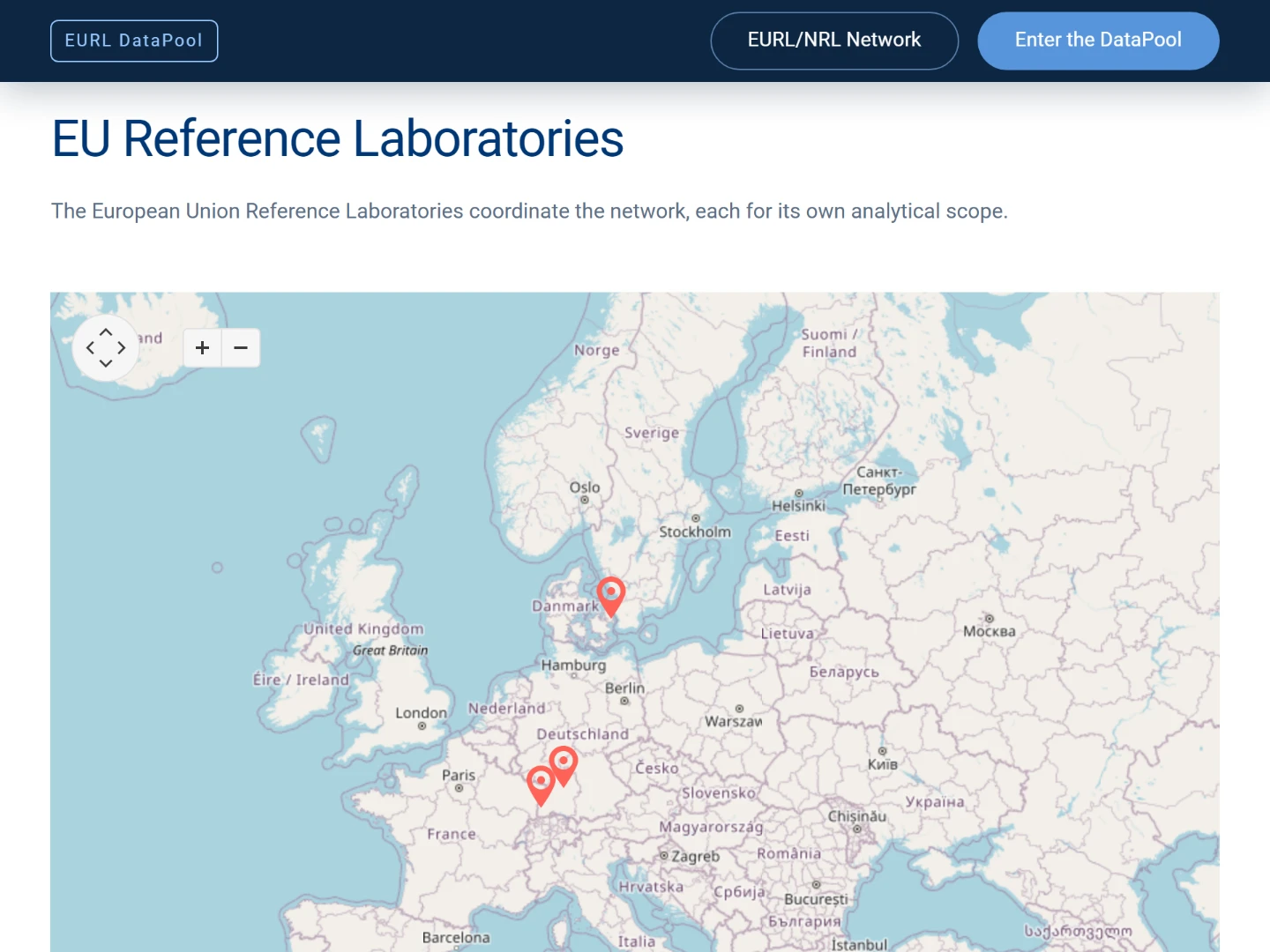
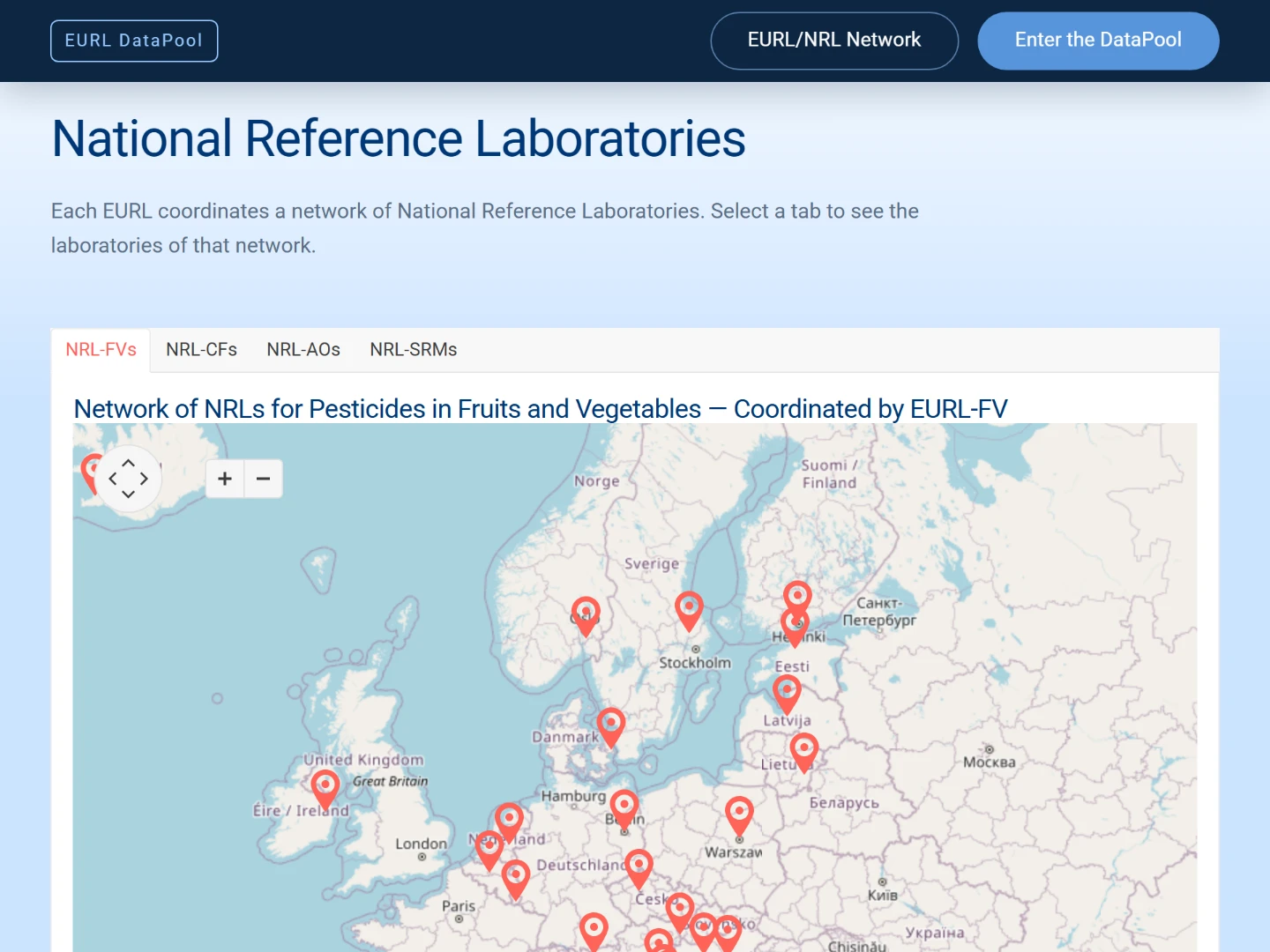
Contributing institutions across the reference network

What the DataPool offers

Two ways in, depending on who you are

Whether you want to look up a residue definition in thirty seconds, or run a full measurement uncertainty estimation against your own validation data, the DataPool is organised around those two very different visits.

Open databases

Freely accessible reference data for anyone working on pesticide residues — no account required, and no barrier between a question and an answer.

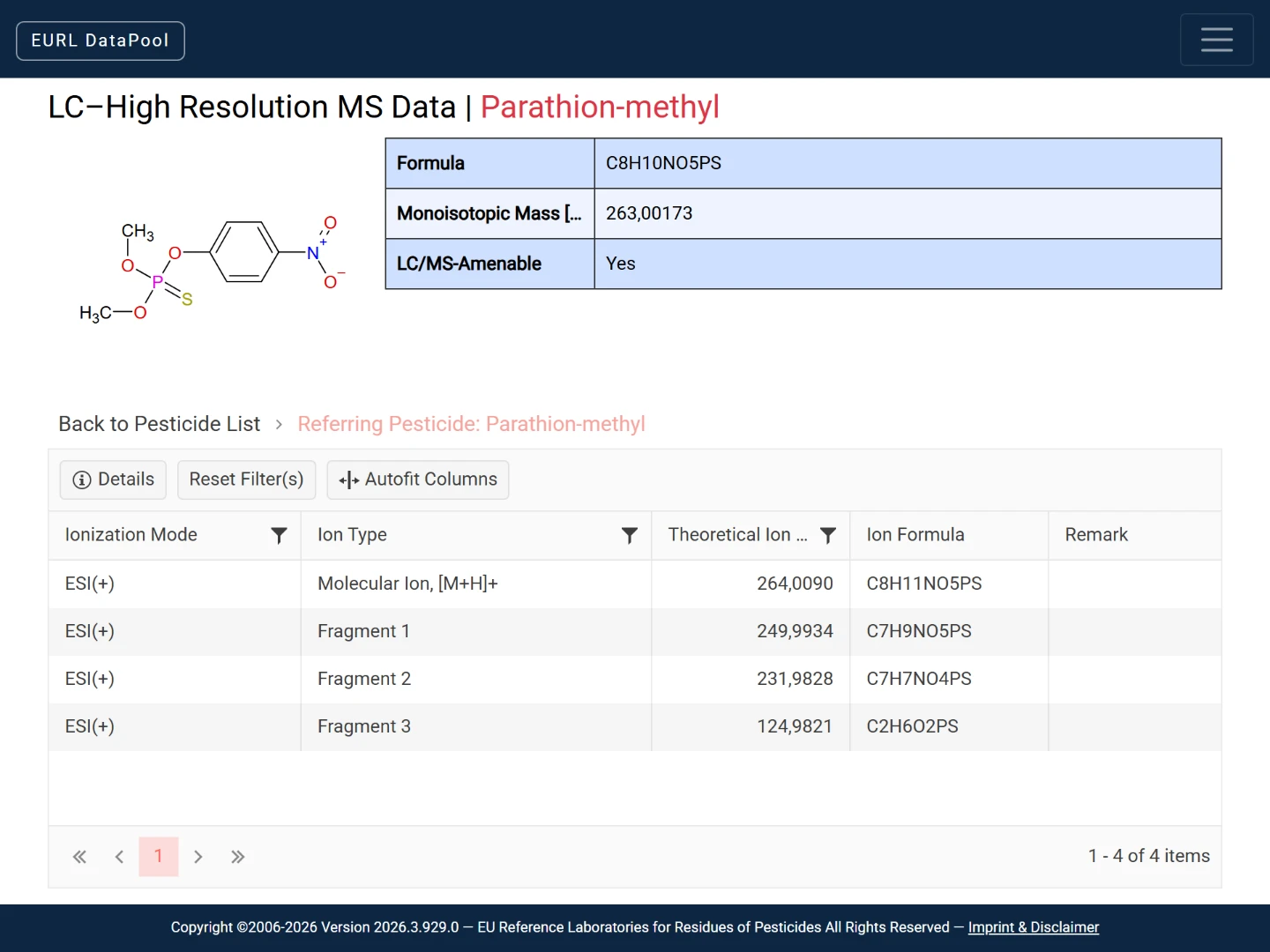
  • Pesticide Compound DB with physicochemical properties
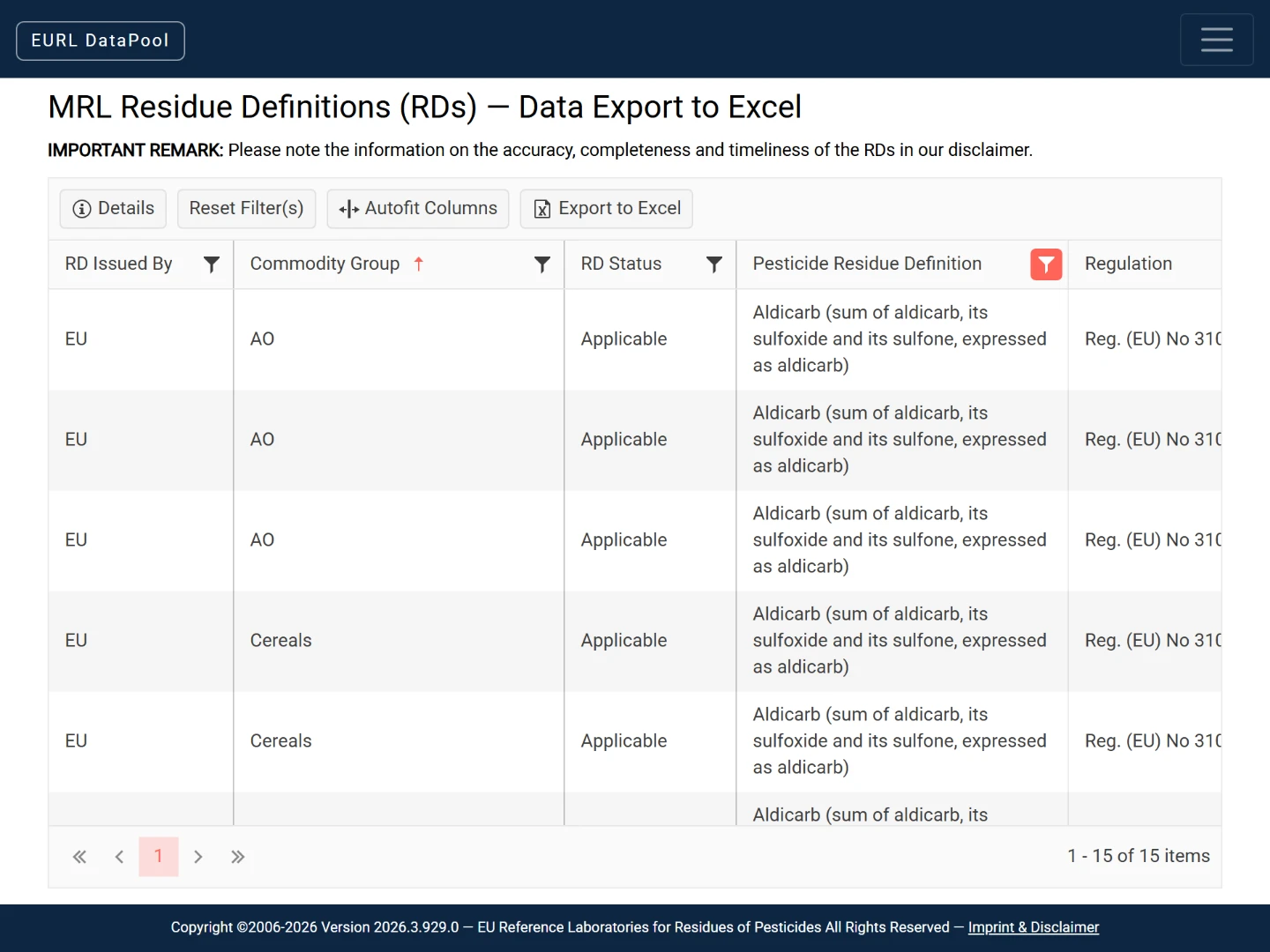
  • MRL residue definitions from EU and Codex Alimentarius
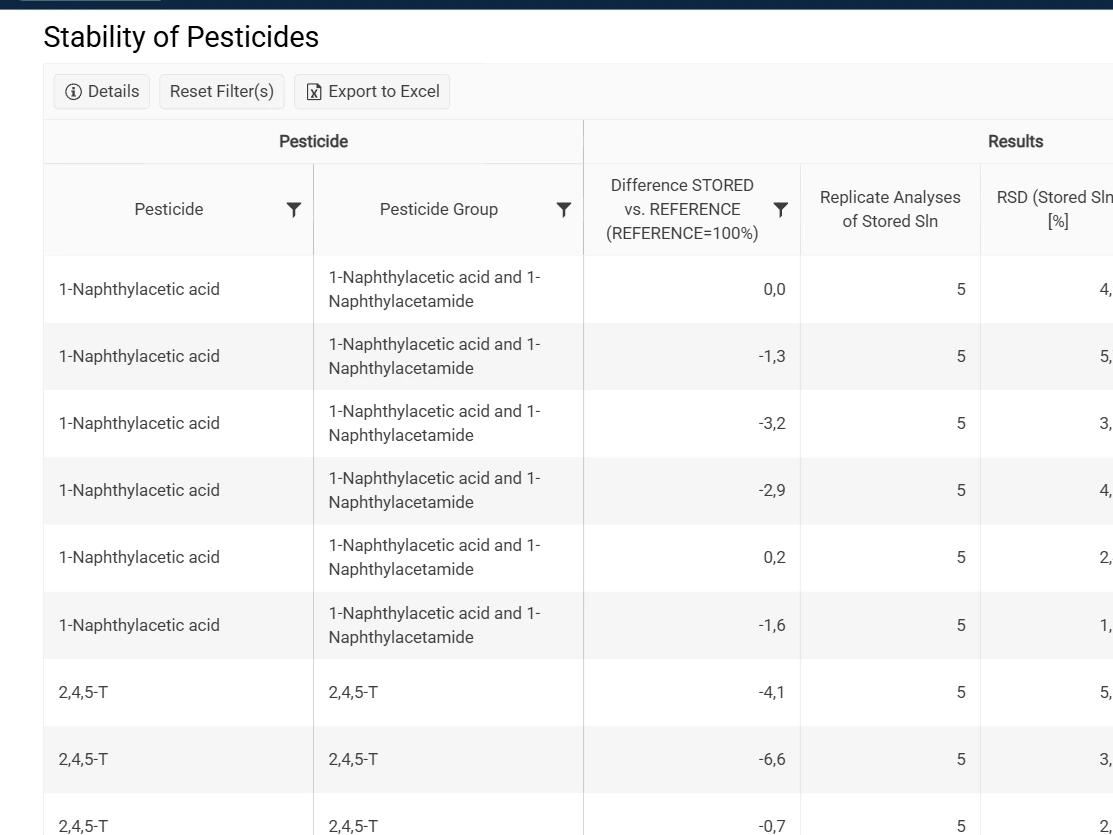
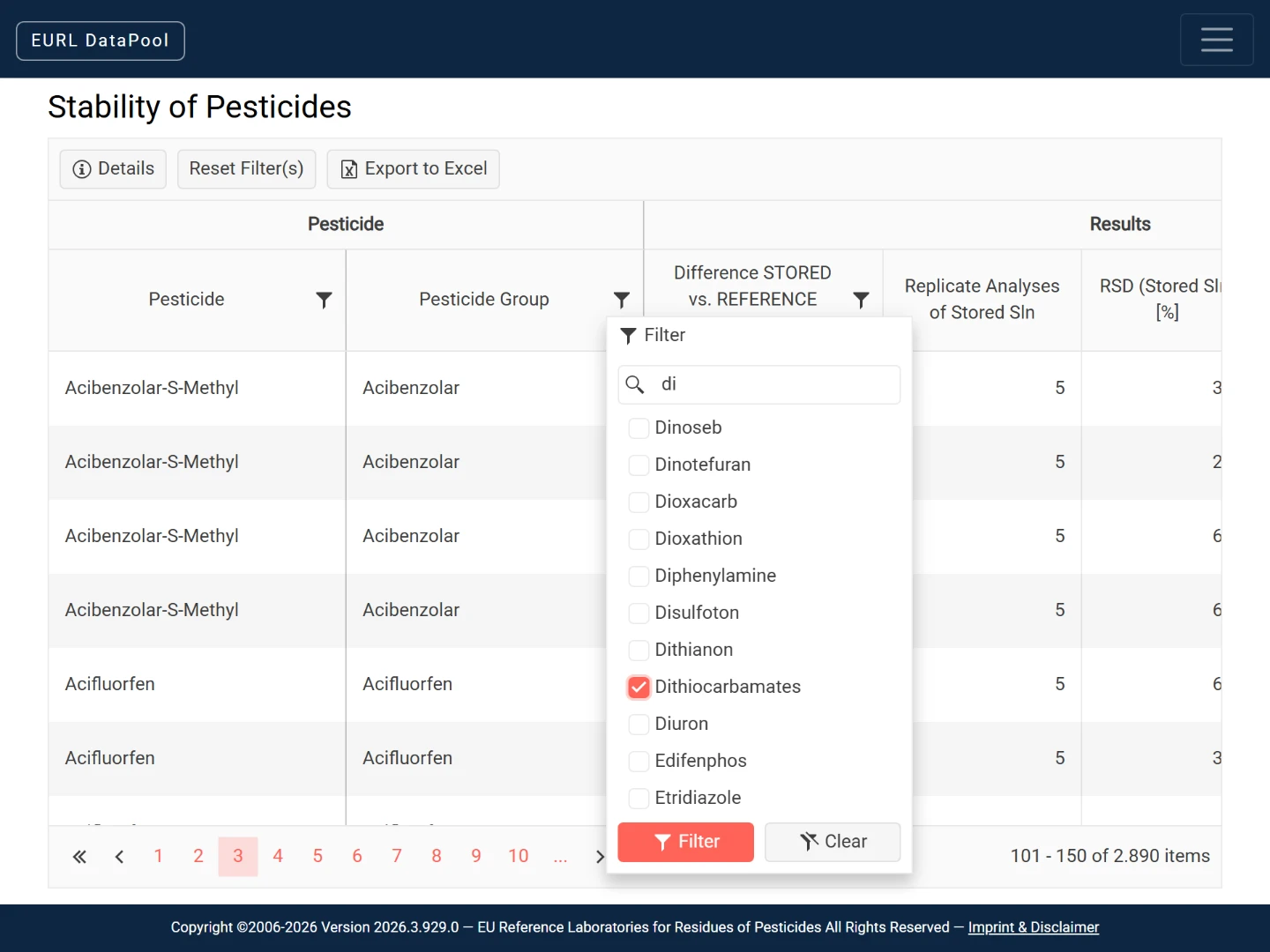
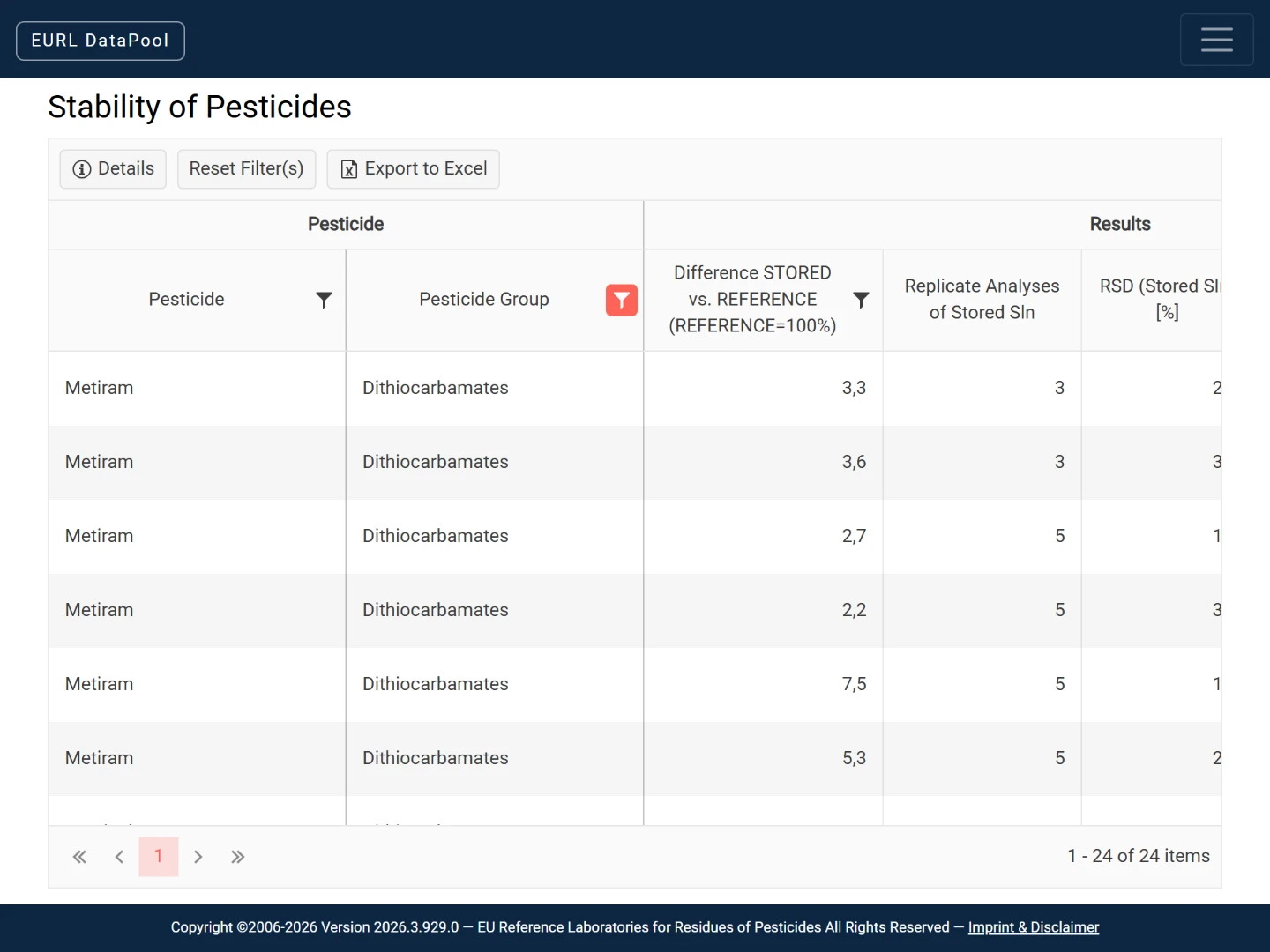
  • Stability of compounds in solution

Network member tools

For laboratories in the official EU network: your own validation records, your proficiency test history, and the tools that read from both.

  • Method Validation DB and the Lab Network DB
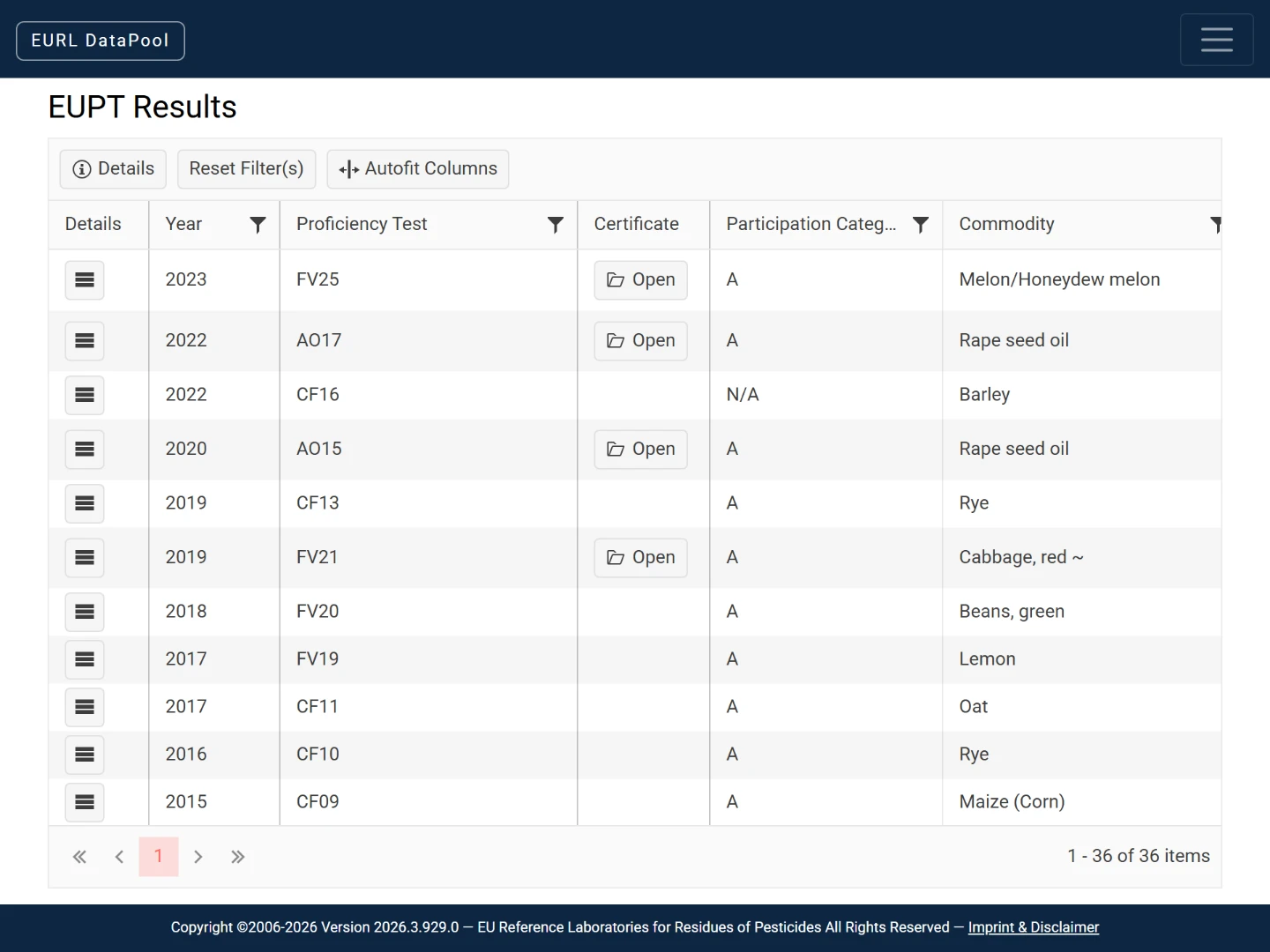
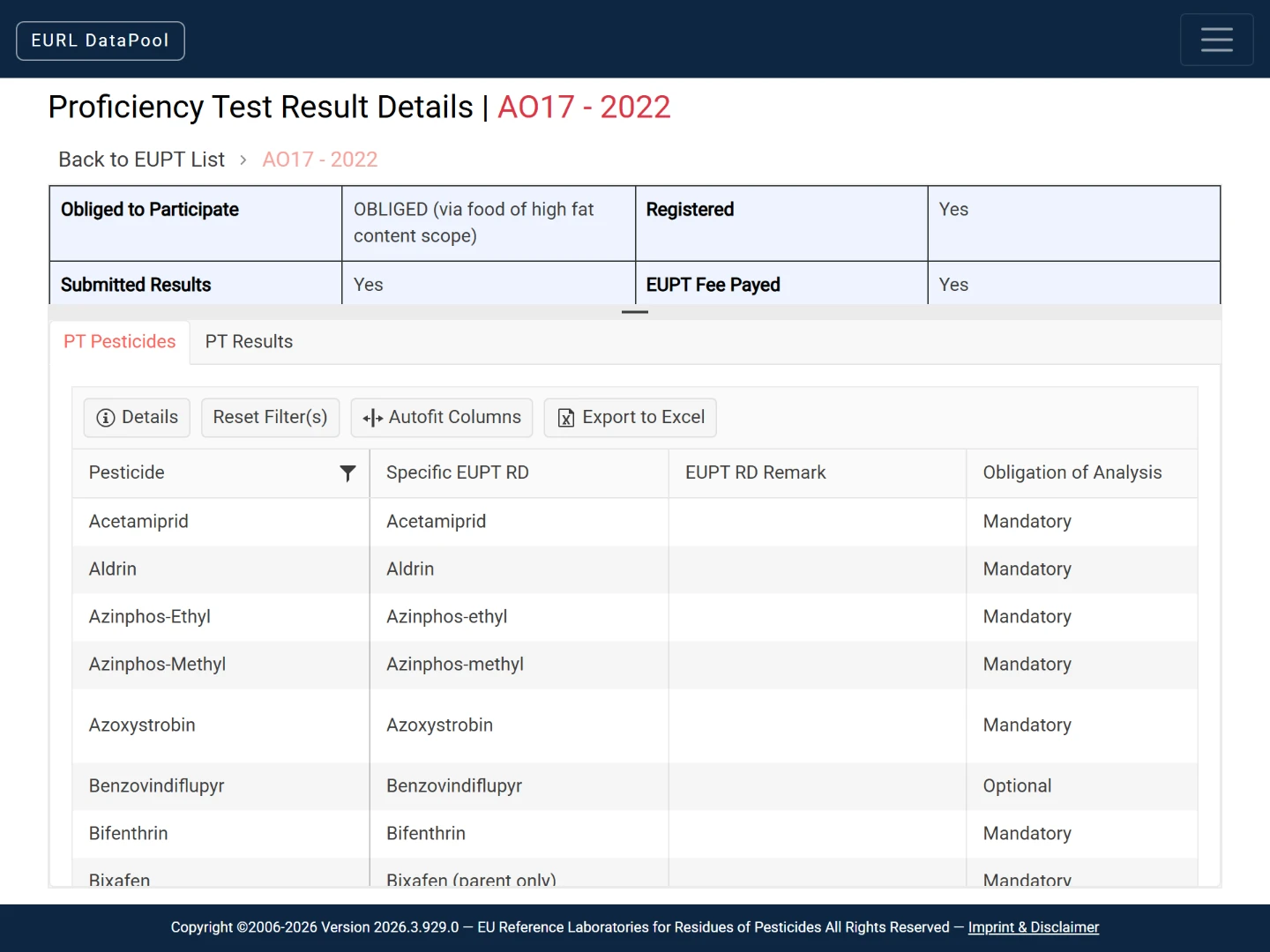
  • My EUPT results, extracted from the EUPT Archive
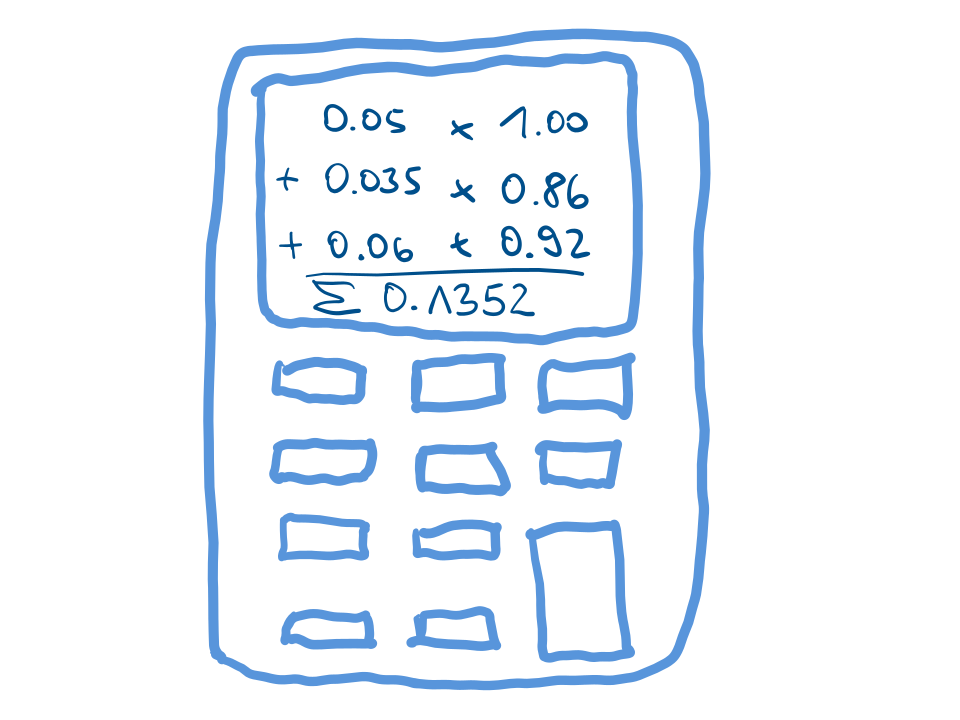
  • Measurement uncertainty estimation for NRL members
The problem

Residue data is generated everywhere and pooled nowhere

Validation and stability experiments are performed by laboratories all over the world. Traditionally there has been little coordination in bringing that work together. The cost of that shows up in four ways.

01

Duplicated effort

The same experiment, thirty times over

A validation run completed in one laboratory is rarely visible to the next, so the same compound–commodity combination is validated again and again at full cost to each institution.

02

Inconsistent definitions

Same compound, different scope

Residue definitions differ between the EU and Codex, and shift over time. Comparing results across laboratories means first agreeing on what exactly was being measured.

03

Fragmented records

Spreadsheets, inboxes, archives

Validation data, proficiency test outcomes and stability results tend to live in separate files owned by separate people, which makes any overall assessment a manual reconciliation job.

04

Moving requirements

Limits and scopes keep changing

Maximum residue levels and control programme scopes are revised regularly. Staying current across every market a laboratory reports into is a continuous research burden.

The platform

What you can actually do here

Four things the DataPool is built to make quick, each backed by data the network contributed itself.

01 — Compound DB

Look up a compound and its properties

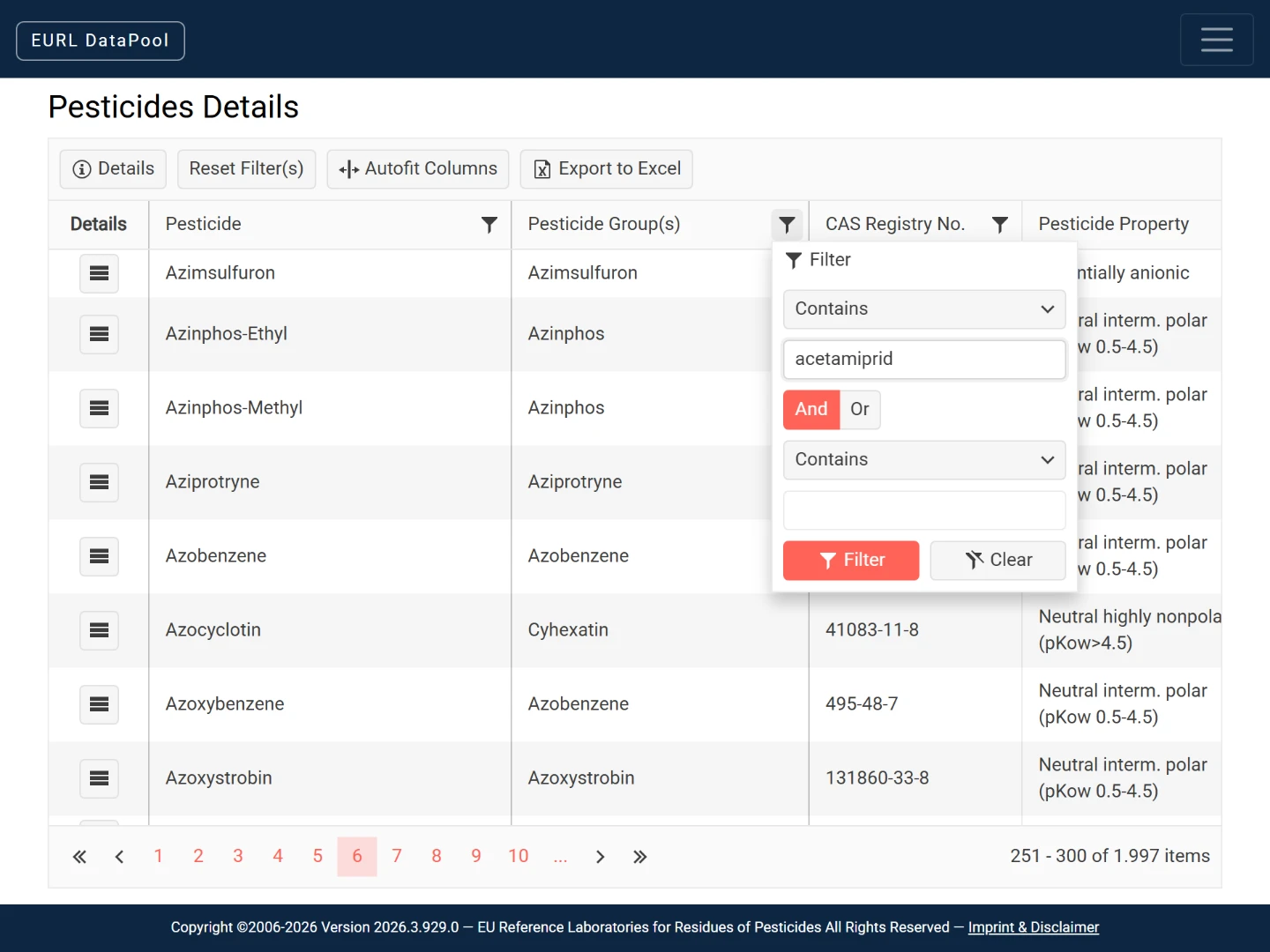
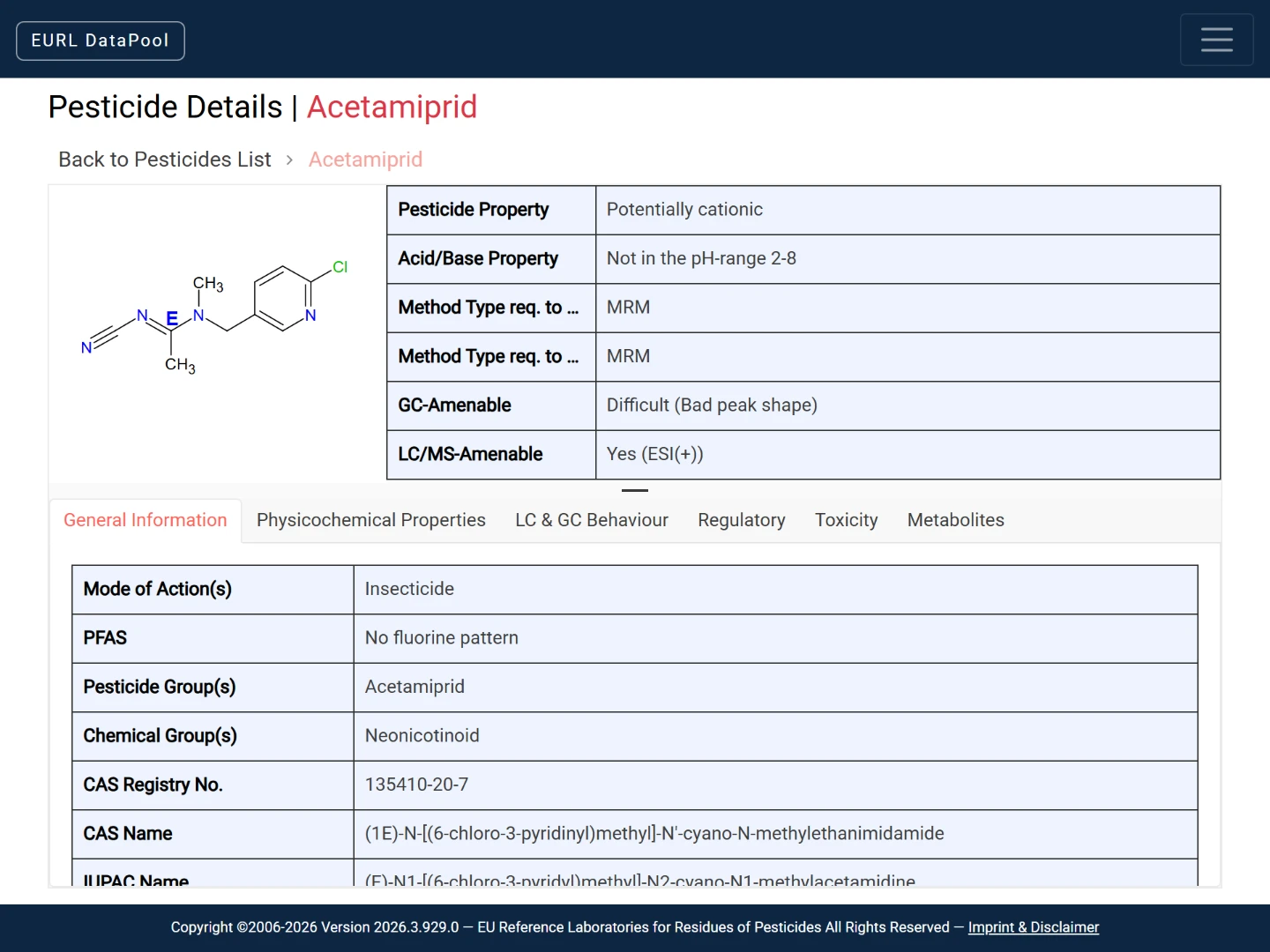
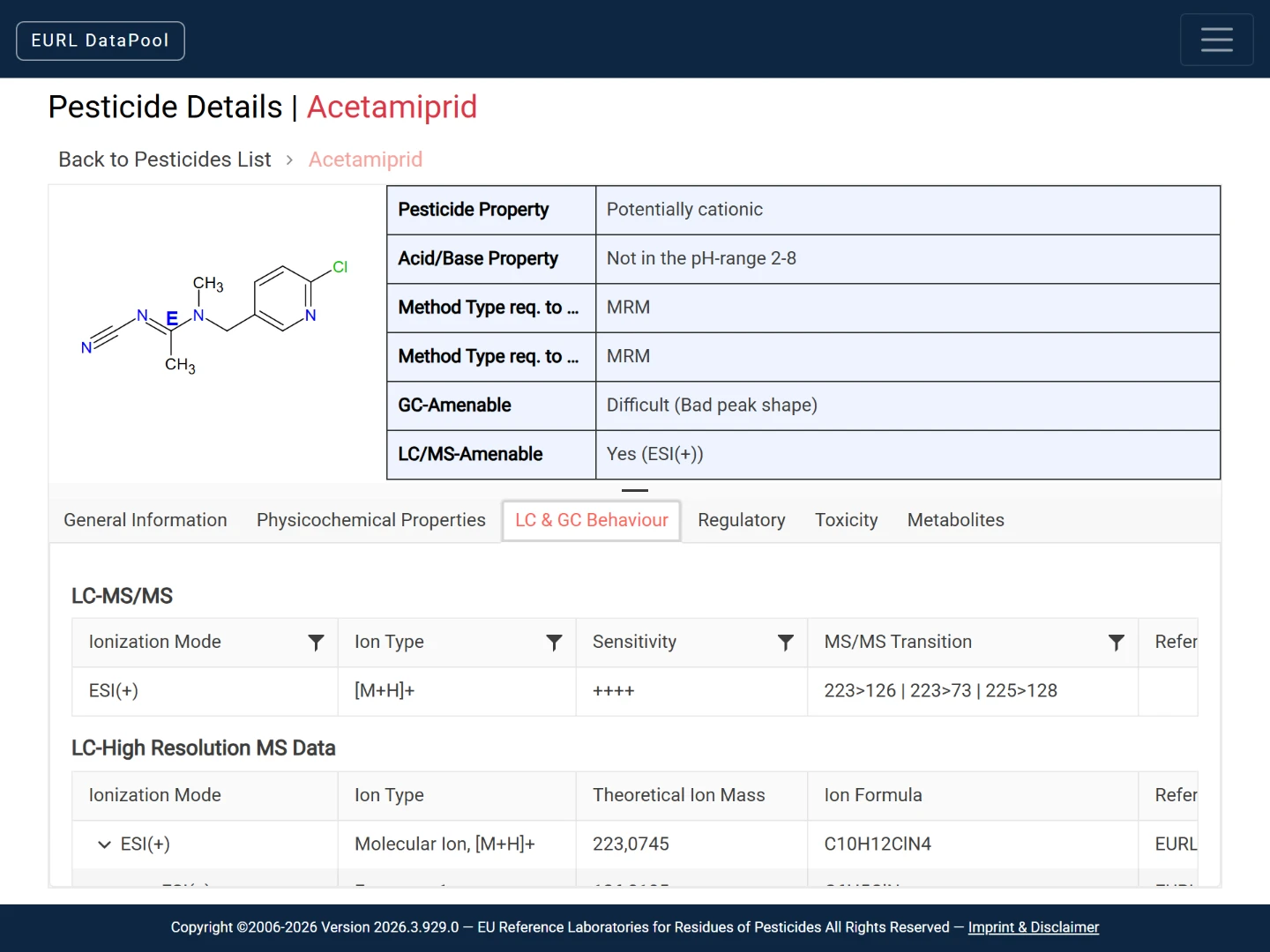
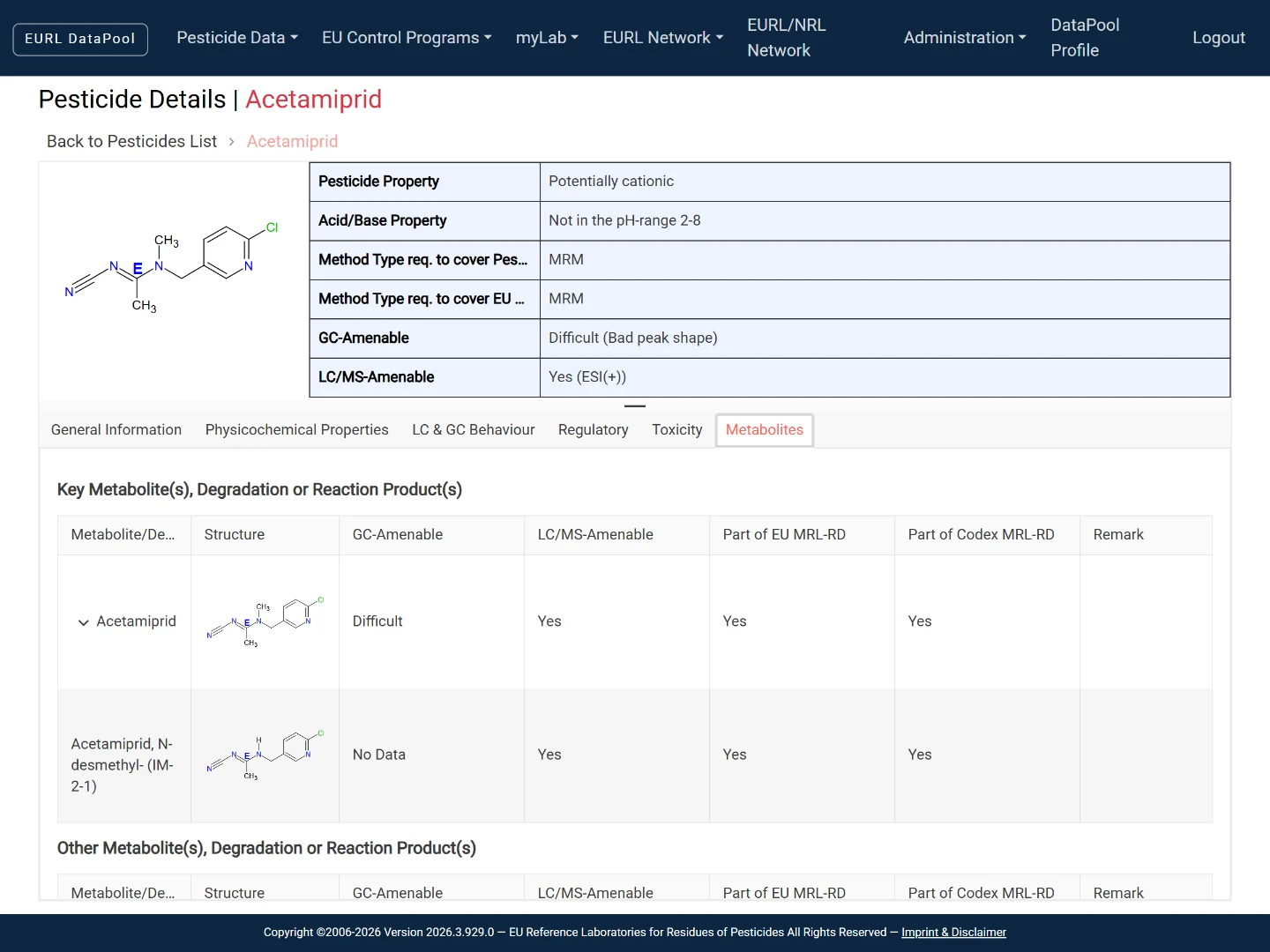
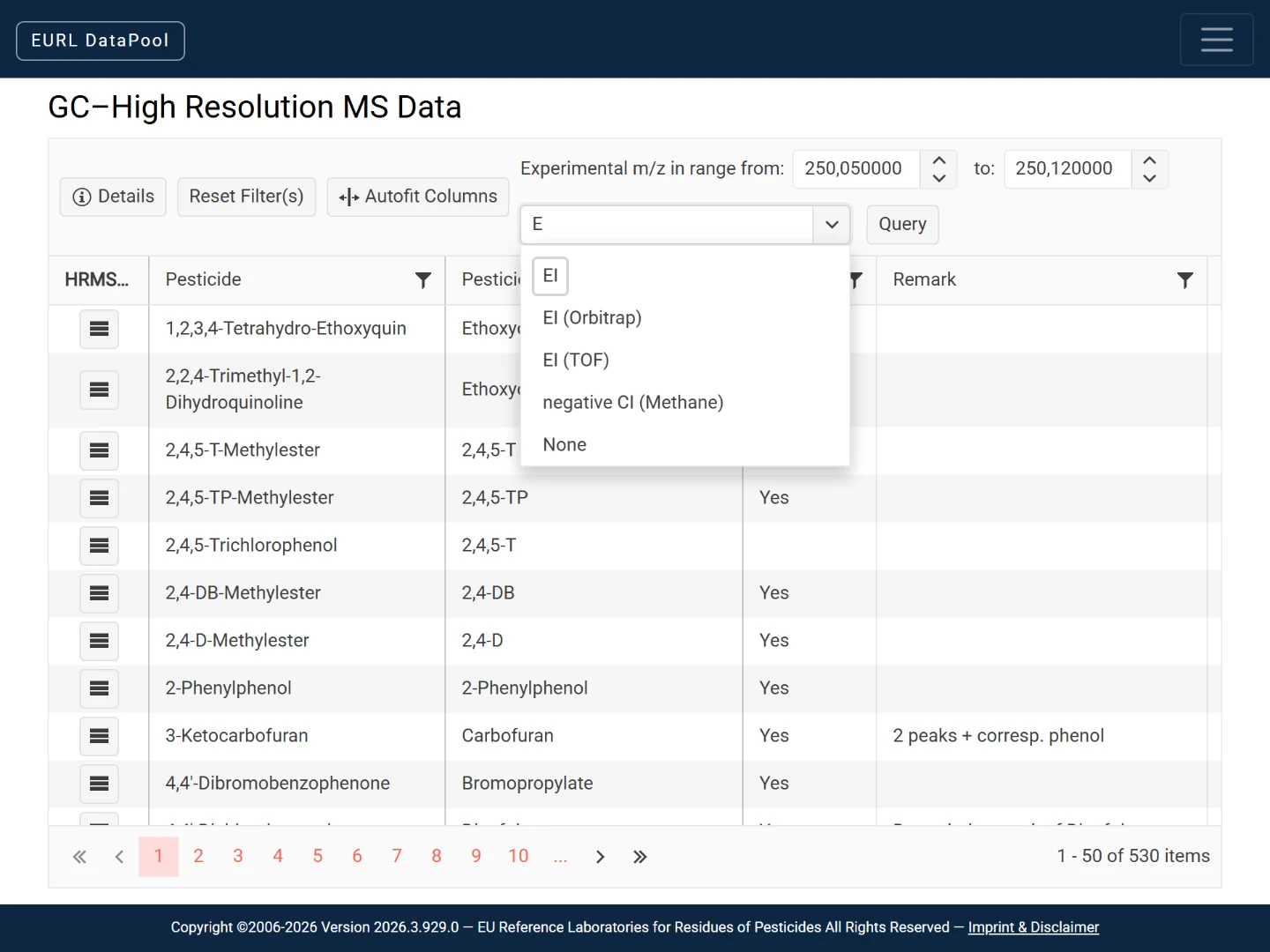
Search the pesticide compound database for identifiers, chemical grouping, pKa values and physicochemical data, then move straight from the compound to the residue definitions and methods that reference it.

Browse compounds
02 — Method Validation DB

Compare validation results across laboratories

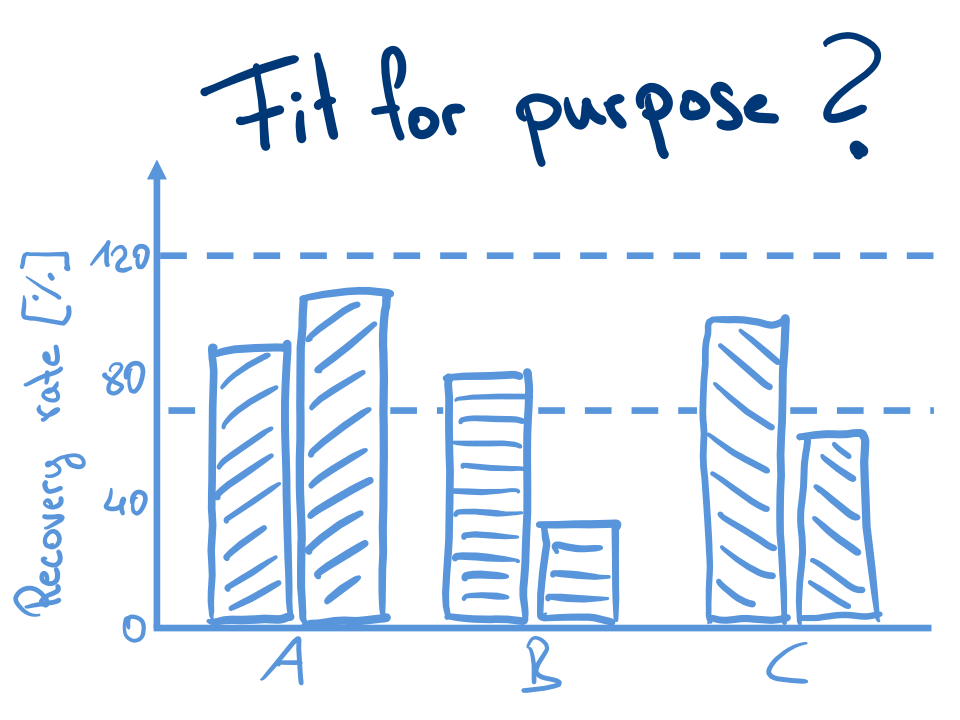
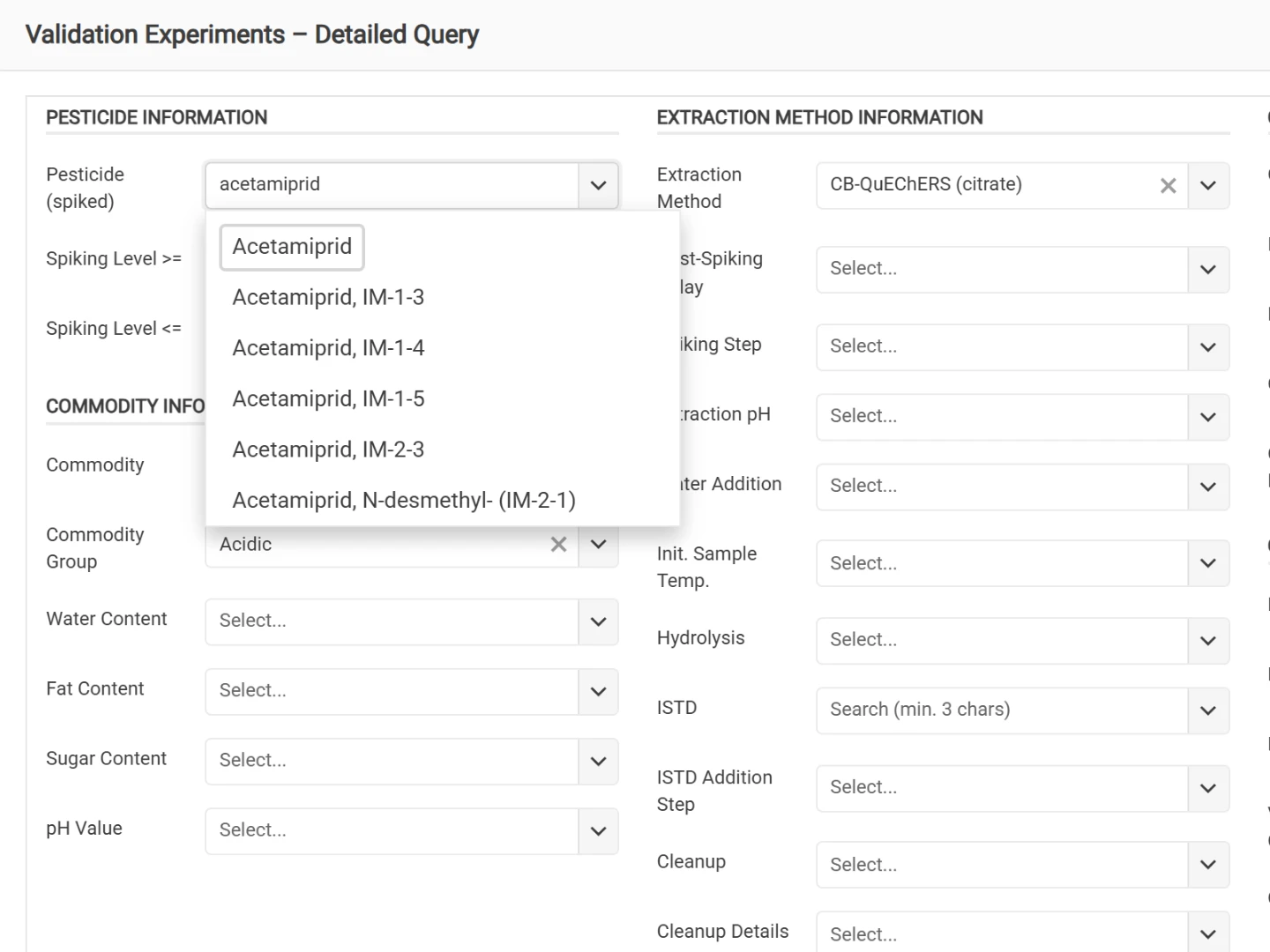
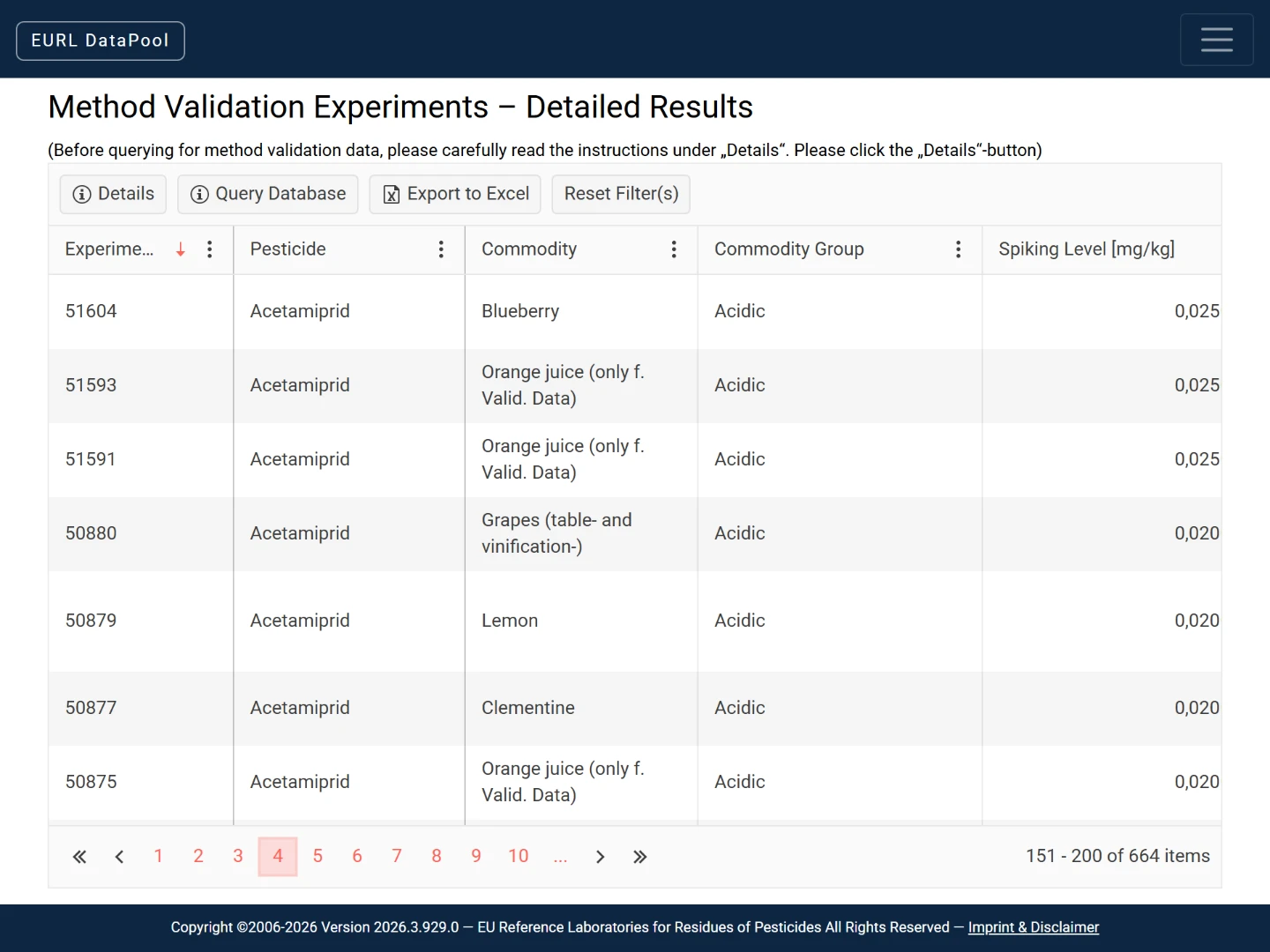
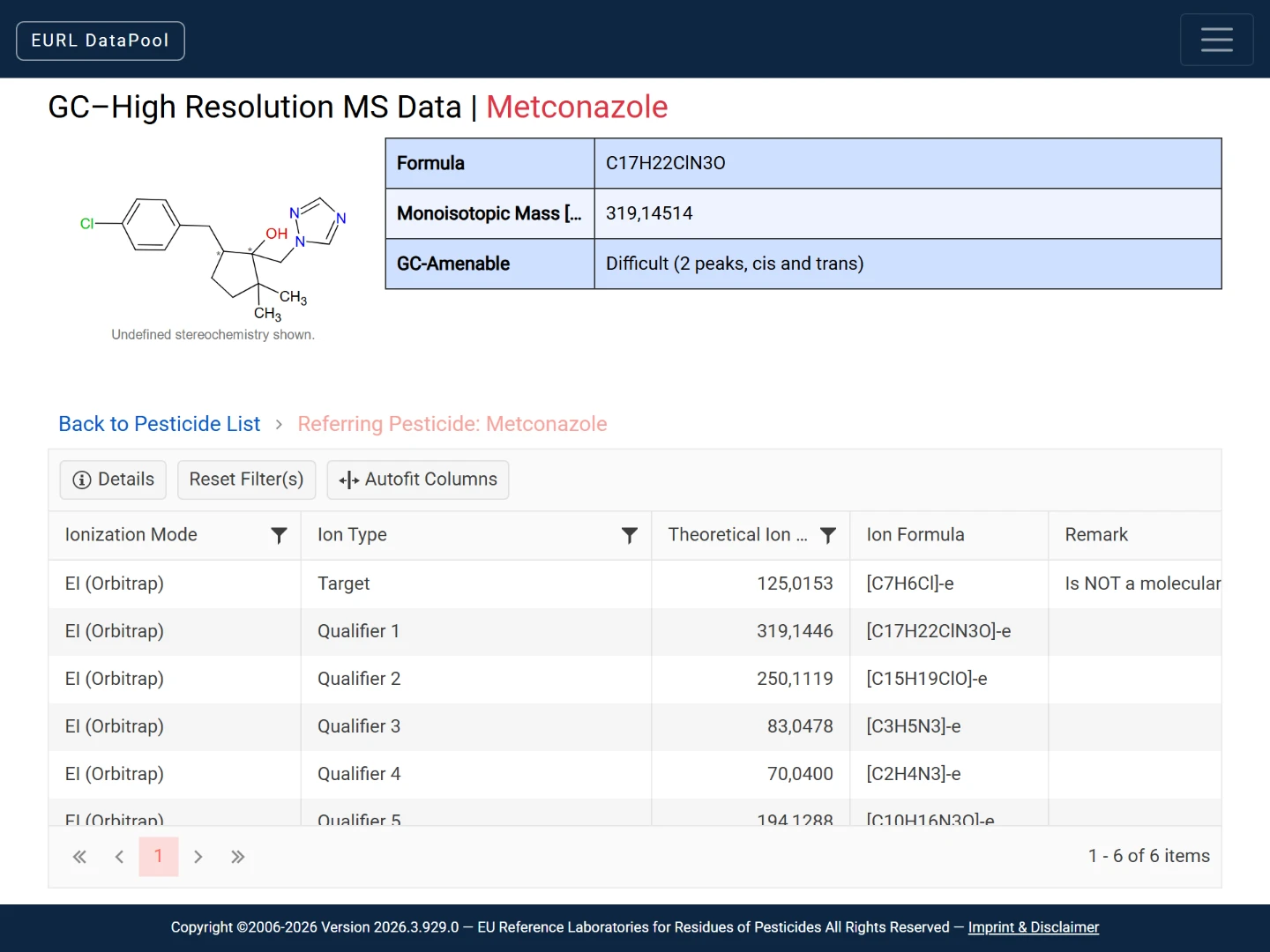
Filter validation experiments by compound, commodity group and technique to see what has already been demonstrated, at which spiking levels, and with what recovery — before committing bench time of your own.

See the method data
03 — Stability & physicochemical data

Check how a compound behaves in solution

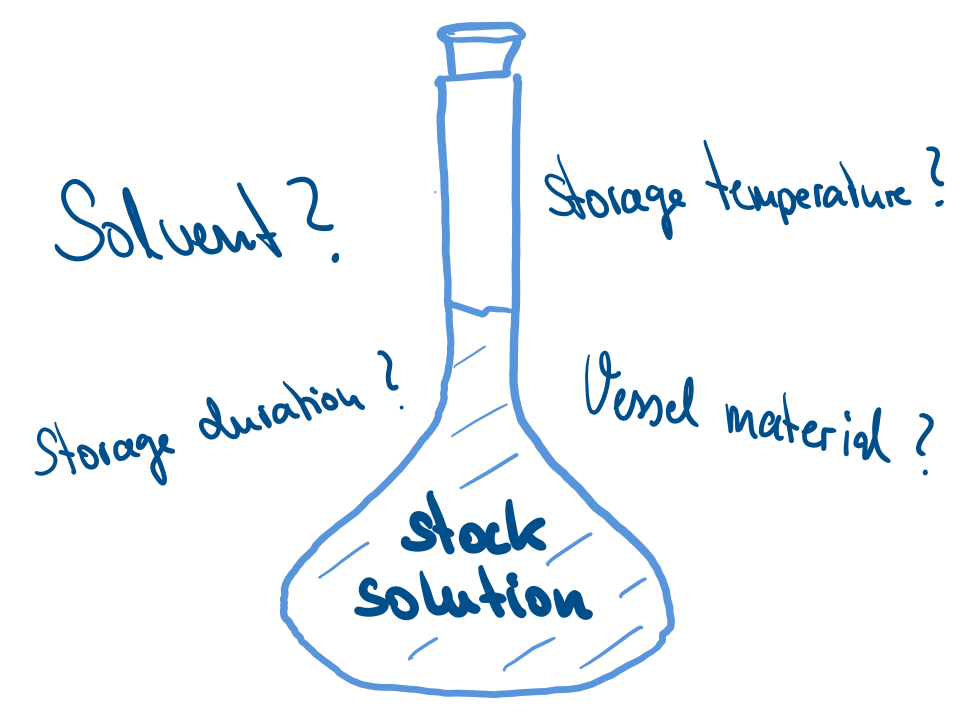
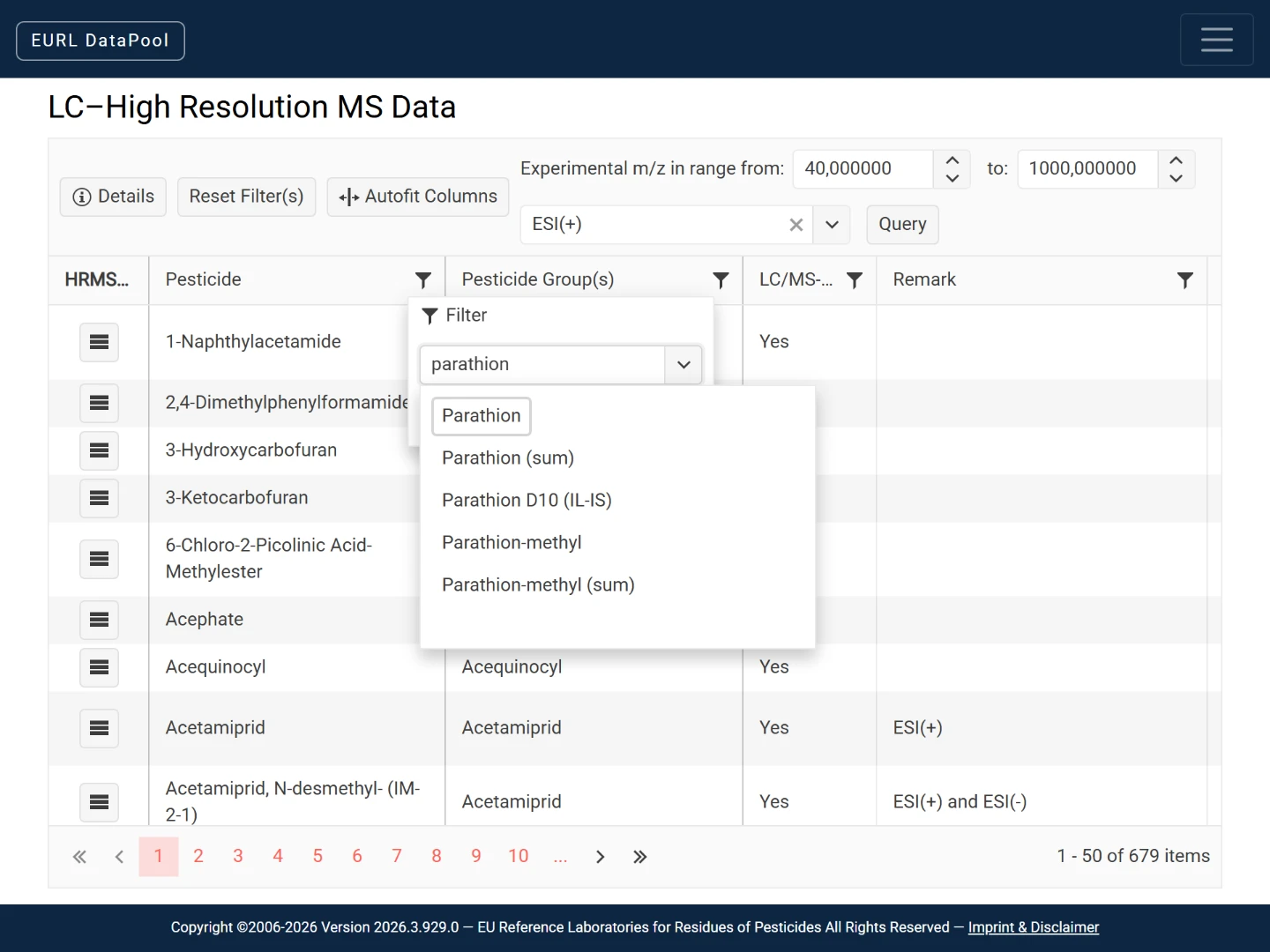
Consult pooled stability experiments to judge how long standards and extracts remain usable under given storage conditions, alongside the physicochemical data that explains the behaviour.

Review stability results
04 — Measurement uncertainty

Estimate uncertainty from your own results

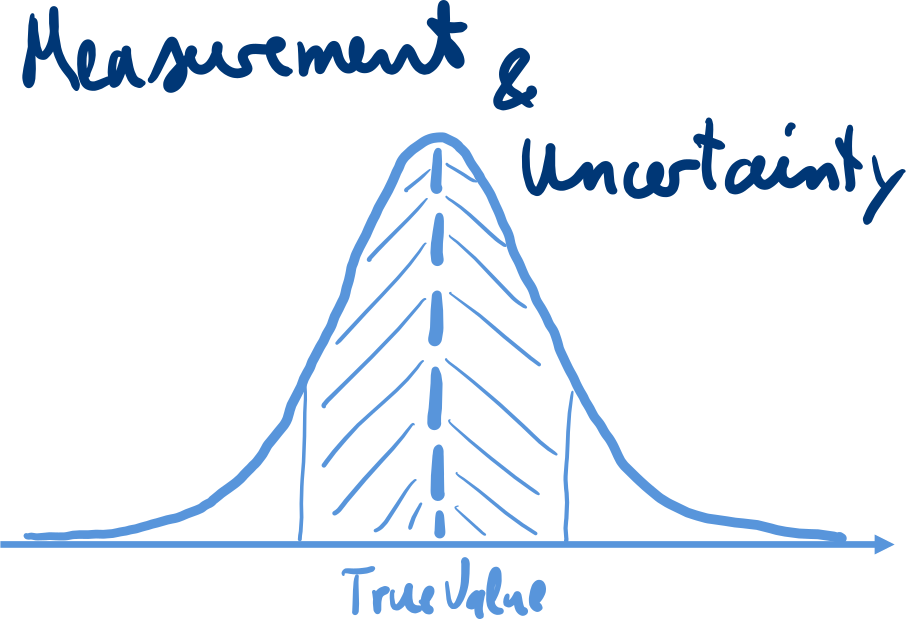
The online tool combines your EUPT outcomes with your method validation data to produce a defensible measurement uncertainty estimate, without rebuilding the calculation in a spreadsheet each year. Available to NRL members.

About the tool
Placeholder figures

A shared record, growing with every submission

0

Compounds catalogued

0

Contributing laboratories

0

Validation records

0

Of pooled history

Who uses it

Built by the network, for the network

The DataPool is only as good as what goes into it, which is why access is shaped around the role a visitor plays in the official control system.

National Reference Laboratories

NRLs maintain their laboratory profile and pesticide scope, submit validation records on behalf of their network, and reach the member-only estimation tools.

Official control laboratories

Control laboratories consult residue definitions and validation coverage when planning analytical scope against a national control programme.

Research & industry

Researchers and laboratories outside the official network use the open databases as a reference, and are welcome to contribute results back.

Placeholder quotation. Replace with a short statement from a participating laboratory about what pooling validation data changed in their day-to-day work.
Name, Role — Institution
Call for data submission

We greatly welcome and encourage contributions

Numerous validation and pesticide stability experiments are performed by laboratories around the world. This project exists to bring that data together so it can be processed and assessed as a whole.

Questions

Frequently asked questions

Placeholder answer. The open databases are intended to be readable without an account; member tools such as the Lab Network DB and the measurement uncertainty estimation require sign-in.

Placeholder answer describing eligibility for members of the official EU laboratory network, and how a registration request is reviewed.

Placeholder answer pointing at the submission templates and describing the minimum fields required for a record to be accepted.

Placeholder answer on update cadence for residue definitions, MRLs and newly submitted validation records.

Placeholder answer covering citation and reuse expectations for data retrieved from the public databases.

Placeholder answer explaining what is published in aggregate versus what stays visible only to the submitting laboratory.